


![Black Metal Band Pro V2 & ToolKit [22mm]](http://shopcarbinox.com/cdn/shop/files/Frame_427320344_5.png?v=1784536371&width=600)
![Carbinox Limited Bands 6-Pack [22mm]](http://shopcarbinox.com/cdn/shop/files/Frame_427320344_9.png?v=1784537652&width=600)

![Black Metal Band Pro V2 & ToolKit [22mm]](http://shopcarbinox.com/cdn/shop/files/Frame_427320344_6.png?v=1784536392&width=300)
![Carbinox Limited Bands 6-Pack [22mm]](http://shopcarbinox.com/cdn/shop/files/Frame_427320344_10.png?v=1784537676&width=300)









How This Work Watch Saved A Construction Worker's Life After A 20-Foot Fall — And Could Save You Too!


Some job sites don't give you a second chance.
You can't pause. You can't step away. You can't "be more careful next time." On a real construction site, the moment something goes wrong, the clock starts — and most of the time, nobody sees it start.
I learned that the hard way.
I'd been in construction for sixteen years. Residential builds. Commercial projects. Scaffolding in summer heat and winter wind. I'd seen enough accidents to know they happen fast, and they don't wait for anyone to be ready.
I always paid attention. It didn't matter.
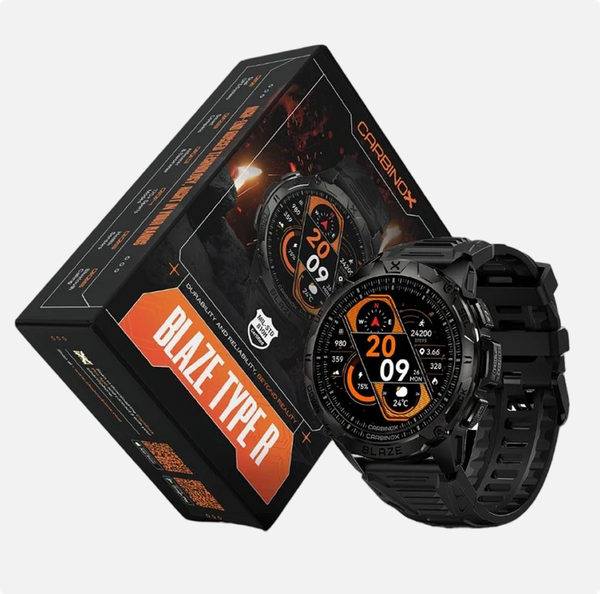
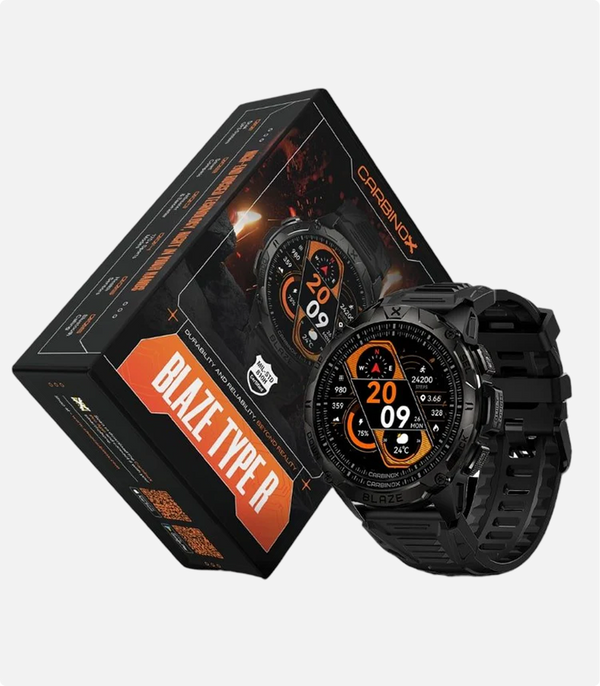
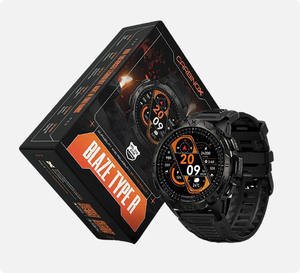
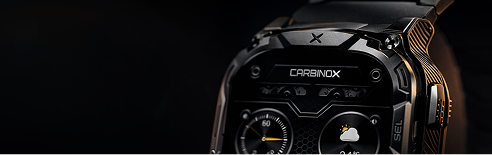
The only reason I'm still here to tell this story is what was on my wrist that morning — a Carbinox Blaze I'd grabbed six months earlier during a promo. I paid $139.95. Retail was closer to $290. I remember thinking it was too good a deal to pass up.
That Tuesday was clear. No wind. I was installing framing on the third floor of an apartment build — a job I'd done hundreds of times. My crew was spread across the site. My foreman was down by the trucks.
I was twenty feet up when the scaffold section gave way.
It wasn't carelessness. The platform failed. A support bracket had been incorrectly installed by another crew the day before. I had no way of knowing.
I grabbed for the edge. Missed.
Then I fell.
What No One Saw Coming

I fell through two levels of scaffolding before hitting the safety net. The net held, but the impact was brutal. Two broken ribs. Dislocated shoulder. I lost consciousness on contact.
My radio was still on my belt. My phone had fallen somewhere above me. I couldn't move, couldn't speak, couldn't call for help.
On the ground below, nobody heard a thing. Machinery was running. A skid steer was backing up. Someone had a saw going two floors down.
That's the part people don't get about big job sites. You can go down quiet, and nobody knows.
Except this time, something did.
My Carbinox Blaze registered the freefall. Impact detected. No movement. Vitals irregular. Emergency mode activated within four seconds.
I never touched the screen. I couldn't have.
The Alert That Reached My Wife Before My Foreman

My wife got the alert first.
Then my emergency work contact. Then the site's safety coordinator. All three got my precise GPS coordinates and the exact time of the fall.
She called the site's main number before the foreman had even looked up.
By the time the crew got to me, I was still out. But they already knew what had happened. Where I was. How long I'd been down. That information mattered to the paramedics who pulled up four minutes later.
On a busy site, four minutes versus thirty minutes is the difference between a recoverable accident and something permanent.
I was unconscious on a safety net twenty feet in the air. The Blaze didn't care. It was already doing its job.
What The Paramedics Knew Before They Arrived

The paramedics pulled up already knowing more about me than I could've told them myself.
My heart rate. The exact second of impact. How long I'd been down. All of it — transmitted from the Blaze on my wrist before they got there.
That's not a feature. That's time that saves lives.
Doctors at the trauma center said the same thing. They were ready before I arrived. They knew my vitals had spiked and dropped. They knew I hadn't moved in over six minutes. They didn't have to guess what they were walking into.
I spent three months in recovery. Two broken ribs. Dislocated shoulder. A concussion I don't remember getting.
But I came home. And the only thing standing between me and something worse was the work watch on my wrist.
Back In My Boots

The day I got cleared to work, I put the Blaze back on.
Not because anyone told me to. Because I'd been unconscious on a net twenty feet up, and the only thing that reached my family was the watch.
I'm not the kind of guy who talks about what happened. I don't bring it up on site. But I never take it off.
Most sites have protocols. Hard hats. Harnesses. Check-ins. But protocols assume you can activate them. They assume you can still speak, still signal, still reach a phone. They assume somebody nearby will see what happened.
None of those were true for me.
Carbinox doesn't assume anything. It watches continuously. Acts automatically. On a site where anything can go wrong at any moment, that's not a feature. That's the difference between coming home and not.
Why My Crew Is Switching

After I came back, three guys on my crew ordered their own.
Not because of the fall. Because of what happened after it.
They'd all been wearing $400 smartwatches that cracked the first time they hit a beam. One guy had replaced his four times. Another was on his second. They were all tired of babying something that wasn't built for their world.
That's how it goes on a job site. When something works, word spreads fast. When something breaks, word spreads faster.
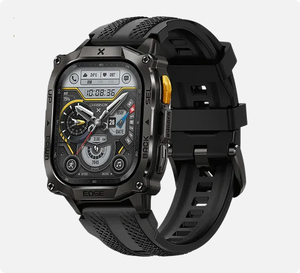
The Blaze normally runs $289.95. GPS. Bluetooth calls from the wrist. Fall detection with automatic emergency alerts. Metal body — not plastic, not rubber, metal. Charges once, runs all week.
Right now they're doing the same promo I bought mine on — around half off, while it lasts. Two of the guys on my crew caught it. The third missed it last time and paid full price.
And it's backed by a Lifetime Warranty — break it, and it gets replaced.
Over 350,000 people already wear one. Most of them don't work in offices.
The Warranty Is Why I Tried It

I'll be straight — I almost didn't buy it.
I'd already blown money on two watches that died on job sites. I was telling myself watches just weren't for guys like me.
Two things changed my mind.
The 45-day risk-free trial meant I could wear it on my actual site, doing my actual work, for over a month. If it cracked, fogged, died, or just felt wrong — send it back. Full refund. Done.
The Lifetime Replacement Warranty meant that even after the trial, if this thing broke under the kind of use I put it through, they'd replace it. That's the kind of promise that tells me a company actually knows who's wearing their product.
I didn't know when I bought it that it would save my life. I just knew I had nothing to lose.
Turns out it was the best bet I ever made. If you're on the fence, the Carbinox Blaze is still backed by both.
If You Work Where Anything Can Go Wrong

If you work with your hands — construction, welding, electrical, mechanical, trucking, doesn't matter — and you've either cracked an expensive watch or given up on wearing one entirely, the Carbinox Blaze is worth a shot.
It's not the fanciest watch on the market. The interface won't win design awards. But it does something $400 watches can't do:
It survives your actual life. And when something goes wrong, it doesn't wait for you to understand what's happening.
Most guys don't buy the Blaze because they're expecting a fall. They buy it because they know one could happen.
And when it does — they don't want to be the one lying there, hoping somebody looks up.
The world isn't made out of pillows. Now I've got a watch that knows it.
SHOP CARBINOX BLAZE HERE